Want to be in the loop?
subscribe to
our notification
Business News
FRESH POLICIES TAKE EFFECT IN SEPTEMBER
Tough punishment of chemical-related incidents
Under Decree No. 115/2016/ND-CP, dated July 8, 2016, since September 15, individuals and organizations will be fined VND 10-15 million for not having a plan or measures in place to prevent and respond to chemical-related incidents during the production, trading, use or storage of hazardous chemicals.
The same fine will also be imposed on those who do not comply with conditions for producing and trading chemicals, insecticides and antiseptic products used at home and in medical establishments.
Support for poor pupils
The Government’s Decree 116/2016/NÄ-C took effect since September 1, 2016, aiming to support poor pupils and schools in communes and villages ridden by extreme difficulties.
Under Decree 116, a pupil of elementary or junior high schools in extremely impoverished regions will be provided with 15kg of rice per month for no more than nine months per year.
Salary regime for officials, public servants and armed forces
Government’s Decree 117/2016 / ND-CP amending and supplementing some articles of Decree No. 204/2004 / ND-CP dated 14/12/2004 of the Government on the salary regime for officials and public servants shall take effect from September 15.
Establishment of tissue bank
Under Decree 118/2016/ND-CP which adjusts or supplements some articles of Decree 56/2008/ND-CP on the organization and operation of tissue banks and the National Coordination Centre for Human Organ Transplantation, necessary conditions for ensuring the operation of the tissue bank, including projected personnel, payroll, operating fund, working office, professional equipment and facilities and other necessary equipment of the tissue bank are also stated in the decree.
Tissue banks have the legal status, functions, tasks and personnel as regulated in Article 35 of the Law on Donation, Removal and Transplantation of Human Tissues and Organs and Donation and Recovery of Cadavers.
New regulations on diplomatic visas
Under Circular 04/2016/TT-BNG issued by the Ministry of Foreign Affairs, which took effect on September 1, foreigners holding NG3 visas are eligible to apply for temporary residence cards with validation periods of up to five years. The validation period should expire at least 30 days prior to the expiration of their passport.
NG3 visa holders are members of diplomatic missions, consular offices, representative offices of intergovernmental bodies, their spouses and children under 18, and their domestic helpers.
Holders of NG1, NG2 and NG4 visas who want to extend their stay permits should ask the bodies or organizations that sponsored them to enter Viet Nam to submit applications for extending their temporary residence cards. The extension period is for a maximum of 12 months and must also expire at least 30 days prior to the expiration of their passport.
‘Green’ products to be exempt from export tariff
Under Circular 128/2016/TT-BTC on export tariff exemption for environmentally-friendly products, products that are in the export tax tables of Decree 19/2015/ND-CP issued on February 14, 2015, and have Viet Nam's green label certificate, will join the export tax exemption since September 23, 2016.
Meanwhile, export tax on products from recycling and waste treatment activities located in the export tax table of Decree 19 will be cut by half.
Source: VGP
Related News

BANKING / FINANCE / INSURANCE / TAX
REMITTANCES TO HCM CITY RISE NEARLY 40% IN Q3
Remittances to HCM City reached more than US$2.83 billion in the third quarter of this year, up 39.5 per cent from the previous quarter and 3.6 per cent year-on-year. This was the first quarter showing positive annual growth this year, helping narrow the decline in remittance inflows over the first nine months. According to the State Bank of Vietnam (SBV)’s Regional Branch 2, remittances transferred to HCM City through credit institutions and economic organisations totalled $2.835 billion in Q3, an increase of more than $802 million from the previous quarter.
TECHNOLOGY
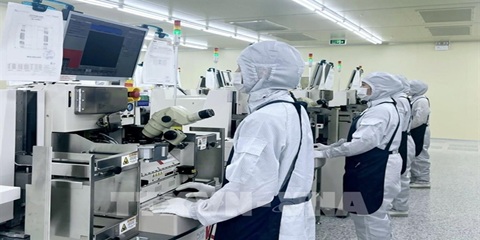
TECH SECTOR GROWTH OPENS UP OPPORTUNITIES FOR VIỆT NAM TO GO GLOBAL
The growth of the electronics, semiconductor and high-tech sectors worldwide is opening up a variety of opportunities for Vietnamese enterprises to integrate more deeply into the global supply chain. However, to become suppliers for these corporations, domestic enterprises must meet rigorous standards regarding quality, technology, productivity and order fulfilment capabilities.
VIETNAM ECONOMY INVESTMENT
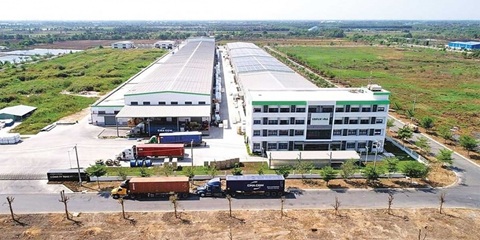
FOREIGN INVESTORS SEEKING A SYNCHRONISED MANUFACTURING ECOSYSTEM
Instead of focusing only on land costs and incentives as usual, foreign investors are seeking a synchronised manufacturing ecosystem, from stable power supply and logistics to shared infrastructure and the convenience of completing residence procedures for experts to serve their long-term investment in the country.
MEMBER CORNER / PROMOTIONS
SENTRYSAFE FHW40200 – PROTECT YOUR VALUABLES, ENJOY PEACE OF MIND!
Looking for a reliable solution to protect your important documents, cash, and valuables from fire and water damage? Genuine SENTRYSAFE - Reliable protection for your valuables and peace of mind! Contact Sen Wai Vietnam for more information and personalized product recommendations.
PROPERTY / INDUSTRIAL ZONE
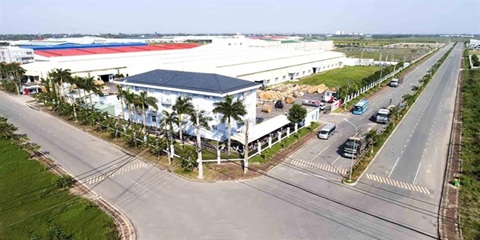
HCM CITY ATTRACTS US$5.7 BILLION INTO EXPORT PROCESSING AND INDUSTRIAL ZONES
HCM City attracted US$5.7 billion in domestic and foreign investment into its export processing and industrial zones during the first nine months of 2026. The figure exceeded the city's full-year target by 31 per cent, highlighting strong momentum in high-quality industrial investment under Resolution No.10-NQ/TW. Total investment reached 131 per cent of the 2026 target of $4.25 billion and represented a 29 per cent increase compared with the same period in 2025, according to the city's Export Processing and Industrial Zones Authority (HEPZA).
INFRASTRUCTURE / CONSTRUCTION / LOGISTIC / PORT
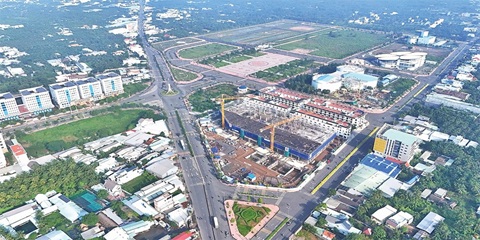
DONG THAP PROVINCE STEPS UP INDUSTRIAL EXPANSION AND INFRASTRUCTURE CONNECTIVITY
Accelerating public investment, strengthening inter-regional connectivity, and expanding industrial land are helping Dong Thap efficiently bolster competitiveness and drive economic growth. Following the 2025 merger of the former Dong Thap and Tien Giang provinces, the expanded Dong Thap province in the Mekong Delta faces mounting pressure to accelerate infrastructure development and strengthen connectivity among local economic zones, urban areas, industrial parks (IPs), and production centres.
Events Sponsors






















